

Why Denver Colorado
The Mile High City. 300 Days of Sunshine. 78 Distinct Neighborhoods. One Market You Need an Expert to Navigate.
Overview
Denver is the undisputed economic and cultural capital of the Rocky Mountain West, and its real estate market reflects every layer of that complexity. With 78 officially recognized neighborhoods — from walkable Capitol Hill bungalows to Harvey Park ranch homes to Central Park’s new urbanism — there is no single “Denver market.” There are dozens, each with its own price dynamics, buyer profile, and appreciation trajectory. That is exactly why working with an agent who has lived and breathed these streets matters.
Quick Facts
Population: ~720,000 (city) | 2.9M+ (metro area)
County: Denver County (co-terminus with the City and County of Denver)
Elevation: 5,280 feet (exactly one mile)
Median Home Price: $630,000 (Redfin, March 2026 — up 5.0% year-over-year)
Price Detail: Range is dramatic: condos in Capitol Hill from $285K; single-family in Washington Park $1.2M–$2.5M; Central Park new construction $600K–$1M+; historic Highlands $900K–$1.8M.
Real Estate Market Summary
In March 2026, Denver bucked the broader Colorado softening trend — home prices rose 5.0% year-over-year while statewide prices declined 2.2%. Homes sell in 19–21 days on average, placing Denver among the most competitive markets in the state. The Denver-Aurora-Lakewood MSA home value average sits around $651,900, reflecting 4.1% annual growth. The city’s job market, walkability premium, and in-migration from coastal metros continue to support demand even as interest rates remain elevated.
Neighborhoods & Communities
Washington Park (Wash Park): Denver’s most iconic residential neighborhood — a 155-acre park surrounded by 1920s bungalows, Tudor revivals, and Dutch Colonials. One of the priciest and most competitive neighborhoods in the city. Expect $900K–$2.5M+ for single-family homes.
LoHi (Lower Highlands): A formerly industrial neighborhood transformed into one of Denver’s most vibrant dining and residential destinations. Victorian rowhomes share blocks with modern infill condos; the rooftop restaurant scene here is unmatched in Colorado.
Central Park (formerly Stapleton): Denver’s largest master-planned community — built on the former Stapleton International Airport site. New urbanism design, prairie architecture, excellent DPS schools, and one of the most active HOA recreation programs in the city.
RiNo (River North Arts District): The epicenter of Denver’s creative economy. Converted warehouses house galleries, breweries, and tech offices. Residential density is increasing rapidly with modern condo and apartment construction.
Capitol Hill: Denver’s most architecturally diverse neighborhood, mixing Victorian mansions, 1960s apartment buildings, and modern condos within blocks of the State Capitol. Urban density with a genuine community character.
Park Hill (Northeast, South, and East): A historically significant neighborhood undergoing a cultural renaissance. Craftsman bungalows, a nationally recognized parkway system, and proximity to City Park and the Denver Zoo. A top pick for buyers seeking character homes under $800K.
Baker: South Broadway’s arts and dining corridor defines Baker’s identity. Smaller Victorian cottages, affordable relative to Wash Park, and an increasingly young professional demographic.
Getting Around: Transportation
Denver RTD Light Rail and commuter rail serve the city through 12 lines covering 100+ miles of track. Union Station is the hub connecting Amtrak, light rail, A Line to DIA (37 minutes), and the Denver B-Cycle bike share network. I-25, I-70, and I-225 form the highway backbone. Denver International Airport connects to over 200 destinations nonstop, with 70+ million passengers annually.
Weather & Climate
Denver averages 300 days of sunshine per year — more than Miami or Los Angeles. January is the coldest month (average high 45°F) but temperatures regularly hit 60°F+ even in winter. July averages 88–92°F. Snowfall averages 55 inches annually but individual storms rarely last more than 2 days. Afternoon thunderstorms and hail are June–August hazards; homeowners should prioritize impact-resistant roofing.
Economy & Employment
Denver is the economic headquarters of the Mountain West. Major industries include aerospace and defense (Lockheed Martin, United Launch Alliance, Raytheon), energy (Antero Resources, Western Gas, renewable energy startups), financial services (Charles Schwab relocated HQ from San Francisco), healthcare (UCHealth, SCL Health, Kaiser Permanente), technology (Oracle’s regional HQ, Arrow Electronics, Dish Network), and government. The metro unemployment rate consistently runs below the national average.
Quality of Life
Denver’s quality of life is defined by its paradox: a major American city (720,000 people) that feels, in its best neighborhoods, like a small town. The parks system — 220+ parks, 4,000+ acres — is among the most extensive per capita for a U.S. city of Denver’s size. The Denver Art Museum, Denver Center for the Performing Arts, and Coors Field anchor a cultural life that punches well above its population weight. Red Rocks Amphitheatre — 15 miles southwest — is arguably the most beautiful concert venue in the world.
Landmarks & Must-See Places
- Red Rocks Amphitheatre — 9,000-seat natural sandstone concert venue; a national landmark
- Denver Art Museum — iconic Daniel Libeskind–designed titanium wing housing world-class collection
- Union Station — 1914 Beaux-Arts rail hub transformed into Denver’s social living room
- Coors Field — home of the Colorado Rockies; the highest-elevation ballpark in MLB
- Denver Botanic Gardens — 24 acres of global plant collections in Cheesman Park
- Denver Zoo & City Park — 84 acres; the most-visited cultural attraction in the Rocky Mountain region
- Larimer Square — Denver’s oldest commercial block; Victorian brick architecture and vibrant dining
Where to Eat: Notable Restaurants
- Guard and Grace (Modern steakhouse): Troy Guard’s flagship; one of the best steakhouses in the Mountain West
- Annette (New American): James Beard nominee; hyper-seasonal menu in Central Park
- Tavernetta (Italian): Union Station’s premier Italian dining destination; outstanding pasta program
- Ultreia (Spanish / tapas): Union Station’s lively pintxos bar; one of Denver’s best wine lists
- Comal Heritage Food Incubator (Latin American): Nonprofit restaurant training program with exceptional rotating menu in RiNo
- Linger (Global street food): LoHi rooftop institution in a converted mortuary (yes, really) with sweeping skyline views
Schools & Education
Denver Public Schools (DPS) is a complex, decentralized system — school quality varies dramatically by neighborhood. Standout options include Denver School of Science and Technology (DSST) charter schools, George Washington High School (International Baccalaureate), and East High School. Central Park/Stapleton’s schools are among the most consistently praised in DPS. Private school options are extensive: Kent Denver, The Logan School, Graland Country Day, and Denver Christian among them.
Frequently Asked Questions
Answers to common questions about living and buying real estate in Denver.
Q1: What are the best Denver neighborhoods for families?
Central Park/Stapleton, Park Hill, Washington Park, and Hilltop are consistently ranked highest for families, based on school proximity, park access, and safety. Central Park is the top choice for buyers prioritizing a planned community with excellent schools and HOA amenities. Wash Park and Hilltop command significant premiums but deliver unmatched neighborhood character.
Q2: Is Denver a buyer’s or seller’s market in 2026?
Seller’s, particularly for well-priced homes in desirable neighborhoods. The March 2026 data shows Denver prices up 5% year-over-year while most of Colorado was flat or declining. Homes average just 19–21 days on market. That said, buyers have more leverage than at any point since 2019 — price reductions are more common, and sellers are open to concessions on inspection items.
Q3: How do I decide between living in Denver proper vs. a suburb?
The core trade-offs: Denver proper offers walkability, cultural amenities, RTD transit, and the social benefits of urban density — at a premium price and with more complex school choice navigation. Suburbs like Arvada, Lakewood, and Centennial offer more home for the money, simpler school districts, and lower density — but require a car for most daily needs. Work-from-home buyers increasingly find Denver proper’s lifestyle worth its premium; commuter-heavy households often find the suburbs make more financial sense.
Q4: What is the cost of living in Denver vs. national average?
Denver’s overall cost of living is approximately 10% above the national average, according to Redfin. Housing is the dominant driver — Denver’s median home price is 44% above the national average. However, Colorado has no inheritance tax, a flat 4.4% state income tax, and no city earnings tax, which partially offsets housing costs for high earners. Groceries, utilities, and transportation costs are broadly in line with national averages.
Want the full market report for Denver?
We want to ensure that you have all the information needed to make the best decisions when it comes to your home goals. When you enter your info below you will get instant access to the area's latest market report, complete with sales and demographic trends.

Local News & Advice
Read helpful resources and articles related to the area.
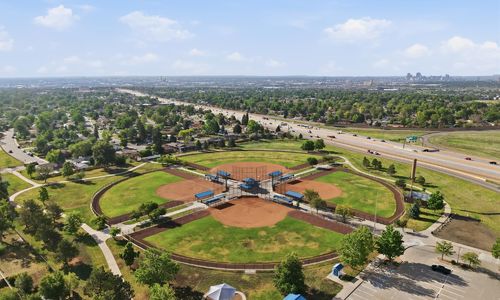
Real Estate Contracts: Legal Terms & Common Agreements
Buying or selling a home in Arvada, Denver, or anywhere across the Colorado Front Range means signing a…
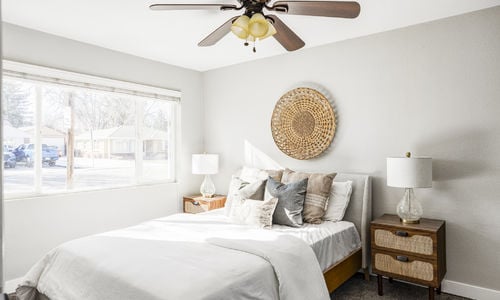
Demographics and Arvada population in Colorado
Population, Age, Housing, and What It Means for Daily LifeTLDR: Arvada is a mid-sized Colorado city with steady…
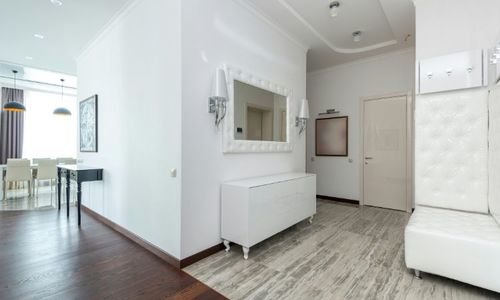
Selling and Buying a House at the Same Time: A …
TLDR: Selling and buying a house at the same time is absolutely doable, but only with clear planning and…